• About “The Salamander’s Quill”
  • Goals and Definitions
  • Copyright
  • Resources and Library
  • I Like What I Do Because…

The Salamander's Quill

~ We hunt the white whale, and we'll no be goin' back!

The Salamander's Quill

Category Archives: Review

Elizabeth Moon’s Divided Allegiance

29 Friday Mar 2013

Posted by André J. Powell in Reading, Review, Writing

≈ Leave a comment

Tags

Elizabeth Moon, Fantasy, Reading

Divided Allegiance (The Deed of Paksenarrion, #2)Divided Allegiance by Elizabeth Moon
My rating: 3 of 5 stars

I enjoyed this volume of Paksennarion’s story and despite some misgivings have become invested enough in the character to pursue her tale in Oath of Gold. Moon’s style matured much between January ’88’s The Sheepfarmer’s Daughter and this volume published in October of ’88. I noticed it most in the superior dialogue of Divided Allegiance. While it still had a long way to go before it would sound as good as it will in her later Esmay and Heris novels, it seemed to me a marked improvement over her first novel.

With the perspective of years, I found the abundance of DnD and Tolkien inspired tropes a bit tedious. At the time however, this was the rage and much of the book’s events could easily have been inspired by a table-top pen-and-paper RPG campaign. Acrya has many similarities with Lolith; the evil iynisin are but drow once removed, and her tombs and ruins are filled with ‘dungeon crawl’ fodder: demon possessed elves, traps, minions and magic. I usually go out of my way to avoid stories that rely heavily on Orcs, Elves and Dwarves but by the time they showed up in force, I was too deep into the storytelling to pull out. And even though this is a testament to her good characterization and plot, I do wish she could have woven a fantasy tale without the need for such. It’s what I enjoyed most about the first book.

I found myself reacting emotionally more to Pak’s clashes with other humans than I did concerning her encounters with the demi-humans. Moon’s writing seemed more authentic and considered in such situations. I wonder if this isn’t why I noticed the improvement in her dialogue. Paks in conversation with her human friends was much more convincing than when she was speaking to her demi-human companions. Indeed, I found myself more engaged and concerned about her relationship with “Socks” than I did about her encounter with the evil iynisin.

I think, there is a lesson here for my own writing.

While it is arguable that the presence of such archetypes and tropes is the very stuff of fantasy, they can come off as ineffective and redundant if handled poorly. For example, in many modern fantasies, The Sword of Shannara and Eragon comes to mind, these motifs are presented as if the author is counting on the audience to bring to the reading experience a whole set of preconceived ideas and notions about them, relying on the trope rather than on originality. This is a gamble if not handle in a more creative manner. On one hand those who love such things, those looking for a reading experience similar to, say, Tolkien, will accept it without question. On the other, the author runs the risk of alienating readers like myself who want more wonder, surprise and awe than another attempt at Tolkien. This is not because I believe Tolkien wrote the definitive version of orcs, elves and dwarves but because so many authors try to present them in Tolkienesque fashion.

I need to remember that it isn’t enough to present a wizard or a unicorn or a magic scroll to my readers and hope that they get it. Such things need to be carefully developed and fed to the audience with deliberation and forethought. For all that, Moon did a fare job of presenting her topes with budding originality and obvious care. Still, I hope she kept Pak’s encounters with them to a minimum in Oath of Gold.

View all my reviews

Elizabeth Moon’s The Sheepfarmer’s Daughter

17 Sunday Mar 2013

Posted by André J. Powell in Reading, Review

≈ 2 Comments

Tags

Books, Elizabeth Moon, Fantasy

Sheepfarmer's DaughterSheepfarmer’s Daughter by Elizabeth Moon
My rating: 3 of 5 stars

No Spoilers

I enjoyed this book very much, but then I like military fantasy. The beginning chapters that treat Pak’s training and establishing herself within a mercenary company, may seem long and slow to those who enjoy more paranormal/superhero-television inspired pop-fantasy, but for those who understand that joining a successful military unit has its own arc and logic and are at peace with that, this book may satisfy the craving.

That being said, some of the combat descriptions are less than unique, I.E. individual. Some of them come across as verbal landscape devoid of landmarks and rather interchangeable. Very little sets one battle off from another. The violence of war is very carefully described and clean…almost choreographed and comes off as a bit bland. I just finished Branden Cornwell’s The Archer’s Tale and think back on his Agincourt and the comparison of combat descriptions there leaves those in The Sheepfarmer’s Daughter rather insipid.

I believe this maybe due to The Sheepfarmer’s Daughter being an early attempt at the genre and her (I think) first novel. I have no doubt things will take on greater depth and more vivid description as the series continues. I was completely satisfied with her Esimay Suiza Once a Hero series which was written nearly a decade later [I have not read the preceding three Serrano’s Legacy books, but I plan to].

All that aside, however, I like a tale of someone rising from obscurity to success with harrowing character-shaping obstacles along the way to give them growth and grit. I am eager to read the next installment and look forward to enjoying Pak’s continued development…as well as Moon’s.

View all my reviews

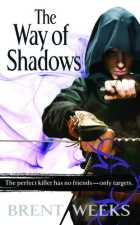
Brent Weeks’ The Way of Shadows

15 Friday Jun 2012

Posted by André J. Powell in Observation, Reading, Review

≈ Leave a comment

I seriously enjoyed this book and read it in a couple of days. I am pretty picky and hold my epic fantasy up to an extremely bright light. I’m happy to say that Weeks was able to present a compelling story that kept the Aesthetic-Distance just about right, so there were only a few moments wherein my Suspension-of-Disbelief was challenged. Weeks maintained great tone and a mood throughout that kept me in the story. That being said, I’d like to have had a bit more information and, for example, have accompanied Kylar on one or two more pivotal “deader” assignments so as to compare an assassination to a wet-op so that the differences between the two could be made plainer.

His characters were well realized. I could so picture Gary Oldman as Blint; Sigorney Weaver as Momma K; Bradley James (from BBC One “Merlin” fame) as Logan. Strangely enough no one stepped into the Azoth/Kylar role, but that didn’t stop me from picturing him in my imagination. Doll-Girl kinda creeped me out. Not because of the way Weeks presented her, but because just before the school year ended one of my students showed me a pic of Dakota Rose–some sort of Internet personality and the image just sorta stuck in my head. I need to do a memory purge or something.

What an odd place Cenaria City must be to live with its juxtaposition of architectural styles over a foundation of rot and the outwardly hard lines between the nobility and the destitute countered by the supremacy of an underworld over that of respectable government. For the most part, Weeks’ descriptions of his world were excellent. I have to admit however, that there were moments when at some serious juncture of climactic stress, it felt like he was trying to describe too much, like his thoughts were getting ahead of his pen, and he lost me and I had to stop, go back and carefully read what was going on to get it straight. Admittedly that happened only once or twice and the problem could have been completely on my part.

One of my tests wherein I decide if reading the rest of the series or book is a good idea or if abandoning it would be a better one is how well the magic system is explained, realized and implemented. I appreciate a carefully considered magic system. It does not have to be a particularly original system as historic precedent and past-practice make creating one rather difficult, but it MUST be consistent in its rendering! It is truly the bread and butter of well realized fantasy. Whether center stage or as background a poorly rendered magic system makes the rest of the story hard to swallow: bad Aesthetic-Distance and a tenuous Suspension-of-Disbelief.

Weeks’ magic system is simple, expository and adhered too, though it is a little vague in places. For example, I could easily comprehend the Glore Vyrden – Conduit – Absorbency/re-charge model, but was not sure how or why certain magic-classes were more powerful than others. Referred to as “Talent,” magical augmentation is what separates a wetboy from an assassin. By extension, I would imagine it would separate other arts and services into mundane and “Talented” classes as well, but I have yet to encounter this.

Culturally much is left to the reader to figure out as there is a complex sub-culture of wytches, meisters and mages grown up around the system. Weeks supplies a glossary on his website and in the back of my version of the trilogy that helps. His “rules” for artifacts are also a bit murky as well, but as the story around them and conflict concerning them develops in the next couple of books, I’m sure it will clear.

I’m into the second book now, Shadow’s Edge, and things are rolling right along picking up a week after the first book ended. It too promises to be a fun ride.

Spartan, A Novel

11 Monday Jun 2012

Posted by André J. Powell in Observation, Reading, Review

≈ Leave a comment

No Spoilers

I think anyone who enjoyed the film The 300 or maybe even the remake of Clash of the Titans would enjoy this book. Certainly any reader who has a hankering for more things Spartan would like this book. Manfredi is at pains to honor original sources and as an archaeologist by trade, offers a wealth of rich detail and enough authentic description to make the reader feel as if they are in the midst of the action. The read is a lot of fun and reminds me more of a medieval romance, with its mysterious strangers that appear briefly and disappear, mystical prophesies that haunt the characters’ destinies and divine miracles and interventions than it does a historical novel.

Ironically, this is also wherein I find my two, albeit minor and personal, complaints. While I enjoyed Mandredi’s book quite a lot, he seemed to have trouble in deciding whether he wanted to write a fiction with mythological seasoning or a historical fiction that presents events as they might have been. This robbed me of completely abandoning myself to his storytelling. I personally do not feel both styles fit very well together. Either the story begins to sound too much like a fantasy to be historical or too much like the grit of history to be a fantasy. I think a book is more effective choosing one or the other. I would like to have seen him remove the supernatural suggestions and create a more believable possibility, such as in Pressfield’s Gates of Fire or Whyte’s The Skystone. To his credit, however, Mandredi holds off on any overt supernatural-ism until very late in the novel, it is a bit ‘bumpy’ at times and flirts dangerously with a deus ex machine or two. I have more to express on this topic, more definition to give it, but it is probably best presented in a separate blog entry.

Another minor quibble-point, though related to the above, and has to do with the language of the novel. As a translation, I am never quite sure how much of the author I am getting or how much of the translator. Character dialogue here is sometimes very dramatic, even epic, but then suddenly lapses back into informality in such a way as to be jarring or without natural rhythm. For me this is less than convincing as it disrupts dialogue euphony and pulls me out of the flow of the novel. For example:

     “…I’d rather sleep in the shed because I’m afraid the wolves will be out tonight.”
     “If that’s how it is,” nodded Kleidemos. “But wake me if you do hear the wolves; with my spear I can come to your aid.”
     “Thank you, my guest,” said Basias…

I do not mind the tone, but it sounds odd when juxtaposed with the informal contractions. I feel it should be one or the other and if it is going to shift there should be a plausible reason for it. I couldn’t help but smile and even chuckle a bit–“…with my spear I can come to your aid.” I am not sure if Manfredi wanted me to laugh to myself at that moment or not. Now, in his “Author’s Note” afterward, Manfredi mentions, “I’ve respected the original sources as closely as possible, seeking even in the language to reproduce the mentality and manner of living.” Those original sources, he mentions “Herodotus” for example, can sound pretty Homeric as the ancient writers seemed keen to give their narratives that Homeric sound of authenticity their readers no doubt expected. I wonder if what is coming through here is a mixture of Manfredi’s attempt to sound a bit Homeric and the translator’s own choices.

As I said, it is a minor point, but as a wannabe writer presently working on my own admittedly poor skills in writing such, I find it very important to keep the reader engaged in the story and odd dialogue is as sure-fire a method for challenging and possibly losing that engagement as any I can think of.

Regardless, I recommend the book to history fans like myself as well as adventure fans or those looking for a fix of ancient rock-‘em-sock-‘em seasoned with a little romance. I plan to purchase and read Manfredi’s The Last Legion, which, by the way, was made into a rather poorly written movie of the same name not too long ago starring Colin Firth and one of my favorite actors Ben Kingsley. The comparison between the two novels and their perspective voices should be interesting. On the other hand, I guess if a really want to know, I should learn to read Italian!

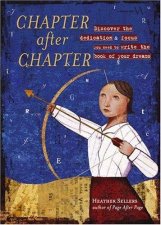
Yes, I’m a Fan Boy: Chapter After Chapter

01 Saturday Oct 2011

Posted by André J. Powell in Review, Writing

≈ Leave a comment

I got so much from Page After Page. It was not a book of technique or a step-by-step guide, though it did have exercises. It described a philosophical approach to why writers write and what it takes to be a writer. The book helped me to see myself as a writer and that I had what it took to sustain a writing life which I had unknowingly been living for years. As I read and contemplated chapter after low-keyed chapter, I began to realize that I had built up so many internal barriers and created so many false definitions, I believed being a writer was a claim only someone lucky enough to publish could make.

If Page After Page was an altar-call to be a writer, then Chapter After Chapter was a devotional, a “…meditation…”, as Heather puts it, on “…the art of writing a book.” I cannot express how grateful I am for her distinctive“…approach to a special kind of writing life” (Sellers 1). Based on my experience with Page After Page, I read each chapter with anticipation, appreciating each carefully crafted idea and observation. I found so much that resonated with me personally in each chapter, that I had to resist blasting through the whole book in one or two settings. I put the brakes on however, and took nearly two months to read it giving over time to reflect, meditate and think on what she’d had to say. As a result, even the parts that at first blush seemed unrelated to me and my experience, I nearly always found an application within.

Chapter After Chapter is divided into three parts. The first is devoted to preparations just prior to plunging into the process of starting a manuscript. The second section concerns itself with the writing of a novel-length manuscript and the unique challenges a writer faces during that stage. The third and final part offers advice and observations on the process’s post-writing phase.

The first two parts were the most pertinent to me as I’m far from anywhere near the publication stage of the process. This does not mean that I found nothing presently applicable in the section three. On the contrary, the chapters were quite informative in preview and will be invaluable once I reach that stage of the process.

In section one, I found so many rich veins of precious ore that I’m sure I will be refining for some time to come. Three chapters in particular, “Surround Sound,” “Positioning” and “Faith in Writing,” stand out in a gallery of outstanding offerings. In “Surround Sound” Heather returns to a theme from Page After Page wherein she paraphrased the age old adage that for every day a writer takes off from writing, his muse takes three. I have suffered this,  “…insidious mental weed called Creep” (Sellers 52) without realizing it. How many times have I allowed the intention to write or a specific project to ‘creep’ right out from under me until it died a hardly noticeable death? The observations and advice in “Surround Sound” gave me strategies for recognizing Creep and how to prevent it from taking over my writing garden,

“Positioning” contains great advice that bears immediate and dramatic fruit. I now position or ‘pre-position’ every night before I sleep. I open what ever Word doc. manuscript I’m presently working on, prepare new headers, label it for the next morning’s session, then reduce it to the taskbar. I open my handwritten writing log, date and time it for the morning. I might add a directional note or two reminding me of what I hope to accomplish during my morning session. I set the dogs’ dishes next to the library door where I write. Finally, I fill the coffee pot and set the timer of Oh-Dark-30 and lay out my work clothes for the next day. It is amazing how much energy this simple ritual gives my writing time from 04:00 to 05:30. As I have said in other blog entries, no other 90 minutes during the whole day is nearly as productive. If for nothing else, Heather’s advice on the how, why and wherefore of setting up this ritual was worth the price of the book.

Being a man of faith myself, I appreciated “Faith in Writing.” Its message resonated strongly with me. As the title suggests, writers must have faith in their writing and in the act of performing it. Writers work hard and quietly in monkish isolation, striving for an intangible goal, a construct only they can see within their hearts. This is as true a description of faith as I can think of. People outside writing find this odd or even irritating as we faithfully soldier on true toward our invisible goal.

The chapter further explores the non-writer question of what good is a world full of writers when realistically only a few of that burgeoning group will ever take their writing beyond self-publication? Her thought provoking and dead-bang answer taps into a part of me that responds with giddy and relieved happiness at having found a kindred spirit who ‘gets it.’ As an educator, this touches me deeply.

There were so many other insights gained from this section and its chapters: “The Book 100,” “The Burden of Being” and “Once Upon a Whine,” to name a few. My copy is covered in handwritten notes, underscores and yellow highlighter. The center section was no less insightful and thought provoking, providing immediate results. Its chapters, “Wise Guides,” “Briads” and “Stuck/Unstuck,” were exceptionally helpful.

In “Wise Guides,” Heather points out that many of us in our gushing need for guidance rush to the How-To-Write-Fiction/NonFiction/Genre bookshelves for advice, buying or checking out all kinds of books on writing. In a desperate frenzy we read about this author’s method and that author’s exercises.  I think that the very week I read that particular chapter, a parcel arrived from Writer’s Digest containing no less than three writing books, two of which began with the title: “The Complete Guide to Writing…” I nearly laughed out loud. Heather suggests in “Wise Guides” that we should narrow our choices and carefully choose but a small handful of ‘advisors’ from both the this-is-how-you-do-it camp (books on writing) and the this-is-how-I-did-it camp (books like the one we wish to write). If we try read them all, we’ll lose time for writing our own manuscripts and be conflicted to boot.

It is with unabashed pleasure that I admit to one of my Wise Guides being Chapter After Chapter representing camp one, and Robert E. Howard from camp two, specifically “Red Nails.” Her rationale for suggesting this strategy and her explanation on how to go about it lifted from me the heavy burden of knowing so little and the anxiety of failing to take in all the how-to’s before attacking my own manuscript. I felt free to pursue my writing and did not feel pursued by hounding experts baying after me,

(indent)“You didn’t read my ‘Idiots Guide to Novel Writing and Publication’…there are secrets here you must know! One false step…and it could be over before you begin!”

(indent)“You must finish ‘The Writer’s Adventure in Archetypes’ if you want to use archetypes and don’t know how? What if you do but don’t do it right!?”

(indent)“You can’t write good dialogue until you’ve read, ‘The Fiction Conversation: A Guide to Knowing If It Sounds Real,’ and done all the exercises herein. You don’t want your character’s to sound stupid…do you?!”

Stop the hurting!

This chapter helped me to shush the guilty voices in my head and to concentrate on my manuscript, Wise Guides at my side ready for a quiet consult when I needed it.

I have mixed feelings about “Braids.” Part of this has to do with where I was in my manuscript at the time I read the chapter which was right after finishing one of those it-wrote-itself sections and I was thinking ahead to the manuscript’s end game. I had already passed the mid-point of my story and it is this vast desert in the middle that Heather uses as her chapter’s a guiding metaphor. The middle of a manuscript can be a place of sun-bleached manuscript bones, a place marked with the tracks of wandering and lost writers. In nautical terms: a manuscript middle can be the doldrums. You’ve worked so hard and suddenly, poof, no steam, no pop, no interest.

Heather suggests that this is the very spot a manuscript needs some zest, an “…element of discovery…” to lift it from the sands of boredom and lethargy (149). An additional storyline might just be what the doctor ordered, adding life and a thickening to the plot just where it’s at its thinnest.

She illustrates the success of such a strategy by relating the story of a creative writing student named Christian. The point she made with his story, again, struck a cord with me and I looked back at my middle and I’ll be damned if it wasn’t strained, rushed and thin. I could see where I’d been wandering about a bit, making half-hearted attempts to find water. It needed something and I suspected I knew what that something might be.

“Braids” suggested that rushing toward the climactic moment might have been a bit premature. Though it’s good to keep the ultimate goal of a manuscript in the mind, trying to push the manuscript toward its end is not a good thing. I have found, in my limited experience, that a manuscript is organic and alive to our subconscious and there may be some unexpected growing to do in areas our conscious mind had not planned for but which makes the manuscript richer and more complete. I wonder if I did not suffer from the doldrums right there in the middle and without realizing it skated over the issue with poor writing in my eagerness to be on my way toward the end of the manuscript. Though I may have tweaked the chapter’s intent to fit my need, it nonetheless highlighted a weakness in my manuscript and a method for improving it.

“Stuck/Unstuck” afforded me concrete strategies for dealing with this writing bug-a-boo. I’m sure every writer eventually develops a tool chest of personal strategies that work for them, familiar tried and true instruments of lifting a manuscript out of a tight spot or sticky mire. I remember one particular section of my manuscript wherein I was at a critical juncture, but I couldn’t get beyond a certain sticky point in the scene to make it work. Every option either made no sense or fell flat as disingenuous.

I took the “Make a List” strategy and became Santa bloody Claus! I made a list of no less than 112 ‘ways’ to escape the trap I was in, some of them plausible some ridiculous. Key, however, was allowing the list to go where it wished and I found myself making sub lists. One of these was a list of reasons why I felt the scene’s content wasn’t working, why I was struggling. I went over the list again, crossed out the bad boys and girls and underlined the good boys and girls. From there I continued the exercise until I lit upon a solution that wasn’t far from my original yet murky and nebulous idea. This time however, it was more considered and tempered by the other ideas that came up during the listing exercise. The time it took to draw up the lists? All damn day, two counting the time I took that evening to think about the last version before my writing session the next day. The list, as Heather suggested, “…gave [me] back [my] power to choose” (168).

As I mentioned in and earlier entry, I finished my manuscript’s first draft on September 16th and am now preparing for the longer revision stage by construction an accurate outline of the story as it is now. Thus, parts of section three of Chapter After Chapter do not yet ring as truly as I’m sure they will in future. This does not mean there aren’t gems to mine…oh, no. In fact the very first chapter, “Writing Is Revising” had plenty of rough cut gemstone to contemplate.

Over and over I remind of my composition students of  that age old adage, “…great writing is not written; it is re-written, re-written and written again…” They groan and know a re-visioning of their work is on the homework slate. In this chapter Heather makes it clear that rewrites are actually a refining process similar to the process a musician or athlete goes through when they are perfecting their art. Each practice, eath go-through is a new version of the old set or exercise. There will be failures, glaring problems will make themselves known (something my students most decidedly do not want to acknowledge), but the process of trying this that ultimately fails and that which improves is like purifying gold in the fire. Writing is refined in the re-writing/re-visioning crucible. Impurities are gradually leeched out and burned away producing a subtly changed and lustrous manuscript. She makes many more amazing points, a couple of which I have to quote here for their pith and truth.

(indent)“Writing is not furniture assembly” (177). Hear-hear! By all the gods, hear-hear!

(indent)“Learning is a series of little improvements punctuated by many, many, many terrible disasters” (178). If there is one reason for present day mediocrity in so many fields of endeavor, it’s this propensity to avoid the difficult and crave the easy. Head ache? Take a pill. Weight loss? Do the same. Change the channels on the T.V.? Use the remote.

(indent)“If you wish to rise, Sextus, do the difficult,” said Ben Hur’s Mesalla. True, true.

There is more to this chapter than simply stating the obvious: writers need to re-write and re-vision. Heather offers a way of seeing revising, of working through the process, that removes it from the realm of drudgery and grind and elevates it to its proper station as a mark of the mature writer. I don’t think I’ve ever looked more forward to the discoveries I’ll make during my revision process as I prepare to separate the wheat from the chaff of my first draft.

An observation on a final chapter and then I’ll close my epic of blatant and unrepentant hero worship. Though I have a lot of ground to cover, many things to learn and an enormous amount of words to write before reaching the point of deciding if my manuscript goes under-the-bed as a point checked off my Bucket List or is prepped for a run at the ‘brass ring’, “No One Tells You,” was a chapter I got a lot from. Here, Heather points out that there are many customs, taboos and truths about the writing sub-culture, particularly about a writer’s post-publication state of being, that no one tells you about. For example, she unapologetically, yet gently, deconstructs the I’m-a-published-author-and-the-world-is-at-my-feet stereotype many of us in the unwashed masses category have dreamed up concerning how it will be after we publish our first missive. The truth is very few will walk the highroad of King, Rowling and Tolkien let along soar to the heady heights of Fitzgerald, Kafka or the Brontës.

“Writing a book doesn’t gain you entry into the Special Club of Famous Authors. Your life, post-book, looks like your life now” (223). She follows this statement with a confession of how she erroneously thought it was going to be, how she learned otherwise and a list of 11 hardcore “No one tells you…” items every writers who aspires to publication should be aware of concerning, “…author etiquette…” and “…how to market your book” (225, 227).

One of the many gems in this chapter was the humorous-because-it-is-too-true paragraph that starts out, “Reality check: The club of people interesting in books and authors is pretty small. That’s why most of your co-workers and friends can tell you who wan the last American Idol, but they don’t know who won the last National Book Award (224). Tragic and true (by the way, that would be Jaimy Gordon for Fiction; Patti Smith for Non-fiction; Terrance Hayes for poetry; and Kathryn Erskine in the area of YA fiction for 2010.

As time goes on and I pursue my writing craft, I know I will come across other experts in the field whose advice and suggestions illicit from me epiphany-al moments and similar blatant admiration…maybe. My reaction to Heather’s observations may simply be a case of my effective filters having never been provoked by her style or the synchronicity of the right things written for me to read at the right moment in my life. I also acknowledge that what I understood and what Heather intended might not be the same either. All three are probably true, but what is also true is that I know I will return to her guides often; indeed, she will likely be one of my “three wise guides” from now on. And I’m sure I’ll gain even deeper insights into the craft, art and philosophy of writing and how they might be applied to my own humble attempts.

Originally posted in The Salamander’s Quill 1.0 now deleted.

I Have A Crush On Heather

17 Saturday Sep 2011

Posted by André J. Powell in Review, Writing

≈ Leave a comment

I bought Page After Page, read the first chapter or two, got scared and left it on my nightstand untouched for nearly a year. The cover freaked me out, the writing style had an odd air to it that didn’t sit well with my sense of composition, and, I told my self, the first two chapters were all too familiar…sounding, on the surface, like a repeat of “You can do it!” rah-rah. The truth was, I was terrified…terrified because I could feel the truth in the vibrations of Heather Seller’s words as they plucked at the strings of my writing subconscious. I believed I sensed that I was about to be challenged with truth, and, for whatever reason, maturity, age, experience, circumstances, forced to confront it and make a life-change decision about whether or not I was a Writer (note the capitol ‘W’) or someone who simply writes about wanting to be a Writer.

When I finally got over my fright and more than a year later blew the dust off the cover and cracked the tiny tome open, yellow highlighter and mechanical pencil in hand, I discovered, as I suspected I would, not a book of ‘how-to exercises,’ though there are writing exercises throughout, but a book of seeing, a book of truth, a book of mirrors. With each chapter, “Lover on the Side, Lover in the Center,” “Butt in Chair,” “Being Away From the Work,” “How to be Unpopular and Why,” and “When Do You Say It?” to name a few, I was forced to confront my assumptions, my delusions and my purity-of-intention in terms of my ‘writing life’ and by the time I ended the book, I can honestly say my entire attitude and vision had been changed. If it sounds like I had a spiritual experience…at the risk of sounding dramatic, I’m going to say, yes…yes, I did—especially in terms of a deep inner adjustment and outward life-style change.

70 days after reading this book, and others that came a long including Heather’s Chapter by Chapter (Hail Oh, “Six Wise Guides”), I began and finished the first draft of a novel length manuscript. Do I lay this heretofore un-accomplished ambition on Heather’s altar, pouring out libations to my new found Writing Goddess? Of course not, I’ve been writing for most my life and have been Jones-ing to write a novel length manuscript for some time. It was inevitable I would eventually succeed on some level. I would be less than honest, however, if I didn’t say that her philosophy of what a Writer is, how our sometimes faulty perceptions influence that belief, her thought provoking essays on the process and craft of writing were vitally critical in helping me to that long cherished yet unfulfilled goal. It would not be too much to say that without her thoughts, I would still be dreaming about writing a manuscript and not actually writing it. Nor would I refuse a drink with the lady and, in the spirit of present honesty, I will admit to a certain crush on the lushishly long haired writing guru.

This does not mean I agreed with everything she had to say or am now the prophet of some ultimate “Way of Heather.” Some of what she had to say simply did not apply to me…yet. My present experience and place in life left some of her chapters a bit less applicable than others. “The Rents” for example, and its references to the, at times, negative influences our parents have on our writing did not jive with my experience (though that chapter’s exercise about “Adding new parents…” and exploring the influences of our favorite authors was well worth doing and gave me a lot to think about…and yes, I added Heather to my writing family tree…lol). Other’s however, like “Lover on the Side, Lover in the Middle,” “Butt in Chair,” and “When Do You Say It?” rang like dinner bells in my inner ear and forced me to confront my own writing practice and perceptions.

This is not a self-help book however, and I hope I have not made it sound like such. That being said, it is a book that helped me toward a greater awareness, confidence and belief in my persona as a Writer and the only such book to speak to me on a level and in such a way that I could understand that indeed, I am a Writer…despite the fact that the cover creeped me out.

Originally posted in The Salamander’s Quill 1.0 now deleted.

The Matter of Romano-Britain

11 Thursday Aug 2011

Posted by André J. Powell in Observation, Reading, Review, Storytelling

≈ Leave a comment

I was probably about 14, just a freshman. and had been a devoted LotR disciple and Tolkien-ite since the age of ten. At eleven I had read Beowulf under the professor’s influence as a scholar of Anglo Saxon and by the time I reached high school age had tackled Hamilton’s and Bulfinche’s mythology compendiums, the Icelandic Sagas, The Mabinogion, “The Tain Bo Cuailnge” and the stories of the Red Branch and Cu Chulainn–some of which my mom had already told me. I vividly remember the local librarians of my small town library shaking their heads in bewilderment and consternation as this teenager requested the,

(indent)“…what is it called again, honey?”

(indent)“The Poetic Edda, ma’am. It’s a poem J.R.R. Tolkien used when he wrote The Hobbit.”

(indent)“How old are you again, young man?”

God bless them if they didn’t find it for me and I spent my time on the bus heading for high school reading it and discovering just where Tolkien had gotten all the dwarf names for those who attended Bilbo’s “Unexpected Party.”

I had serious dreams of one day becoming an Arthurian scholar. This probably had a lot to do with the fact that when I was seven, I screwed off and got behind on my reading scores. The teacher was sure I had a reading problem and sent me off to remediation in the afternoons. “Run, Dick. Run!” My mother was not amused and when she found out, she nearly flipped. She knew I was just acting stupid and being lazy. She told the teacher so, but Mrs. Kennedy was sure I needed remediation as the academic test results indicated I was a poor reader.

Mom hung up the phone smokin’ pissed and gave me the look. I knew a reckoning was coming but wasn’t sure what form it would take. Honestly, I kinda liked remediation as the lady there gave us cookies afterward if we read well to her.

Mom decided that what I needed was more reading and had me sit on the horse-hide couch and made me read to her every evening after that. No cookies. The only grace she did allow was my own choice of book from the home shelves. I narrowed it down to either Robinson Crusoe or L’Morte d’Arthur and for whatever reason, I chose Mallory and the world changed overnight. For whoso pulleth out this sword from this stone and anvil is the rightwise king-born of all England.

All I had really known was that it was about knights and next to dinosaurs, knights were the coolest. Ever read L’Morte? It reads like the King James Version of the Bible only worse, but coming from a family where Bible reading, though not done regularly, was not out of the ordinary, I took the language in stride and was soon lost in the Matter-of-Britain.

When she finally felt I’d had enough, she had me read a passage to my second grade teacher and explain to her what I’d read. I was summarily removed from remediation. No more cookies.

By the time I was a freshman in high school and had read Tolkien, I was an armchair expert on all things Arthurian having read quite a few re-tellings and adaptations of the legends. Eventually, however, I became a little jaded with each new author’s predictable spin and began to explore the truth behind the legend…what little of it there was. I began to read the works of Geoffrey Ashe and other Arthurian scholars and books that explored the archeological findings at Romano-British digs. I eventually ran across a retelling of the legend from the point of view of how it actually might have been, how it might really have started, written by a lady named Rosemary Sutcliff called, The Sword at Sunset. It was with these books, and those like them, that I found my greatest affinity for the legend and fell in love with historical fiction.

When I saw the Eagle of the Ninth was to be made into a movie, I was excited and went to dig out my copy but was dismayed and upset when I couldn’t find it. I don’t know what happened to it, so I bought a new one, now called The Eagle, and the two sequels as well, and spent a wonderful week back in the Romano-Britain of my youth.

Rosemary’s work is subtler and more subdued when it comes to violence. She does not avoid the issue as the era she depicts is one hallmarked by action and upheaval, but she does not sensationalize or concentrate on it. She does not need to aggrandize it to sell her story, as the very nearly pornographic and ultra-violent specialty series so popular on pay-TV now do. Her stories have strong characters that sell themselves to the reader as believable and real. Her descriptions of the countryside are a naturalist’s dream, but they do not overshadow or intrude on the action. And though the novels of hers I have read were all geared toward young men, being the Young Adult Fiction of the ‘50s as it were, they are stories I believe a girl or woman would like because the author depicts her characters with such pathos, empathy and sympathy.

The film version of the book, while not drastically different, is definitely its own interpretation. I enjoyed the print version more as the plot seemed much more plausible than the heroic, yet impossible, journey taken in the film. Don’t get me wrong, I enjoyed them both, but the book offers so much more and is written so well.

Originally posted on my Goodreads profile in March of 2011 and in The Salamander’s Quill 1.0 now deleted.

Unknown's avatar

A wanna-be writer and sometime poet trying to live, love and learn as much as I can with the time I have left.

Recent Posts

  • How?
  • NaNoWriMo’19 Day 1: 1292
  • NaNoWriMo ’19
  • Outlining: What-If Exercises and Variants
  • I’ve Decided to Set Aside WIP 6.1

Archives

Categories

Artist blogs

  • Gracesidhe Decorator, writer, model and librarian!
  • Ravven's Glass Amazing wirter, artist and friend
  • Story Monster Storytelling at its finest–Heather’s site never fails to put a smile in my heart!

Blogroll

  • Magical Words A fantasy/scifi author group
  • Sword and Laser Online book club
  • The Office of Letters and Light NaNoWriMo parent organization
  • The Piper Who Came of Age Too Late My bagpiping blog
  • The Slootsian Dialectics Wizard and scholar-piper

Writer blogs

  • Ink-stained Daydreams The writing blog of Justin Beeman
  • Invisible Ink The fantasy and writing blog of Whitney Carter
  • Story and Somnomancy Writer, Good Friend and Ravenclaw princess

Writer Guru

  • Pocket Full of Words Holly Lisle: author and creator of How To Think Sideways

NaNoWriMo 2017

NaNoWriMo 2013

NaNoWriMo 2012

NaNoWriMo 2011

JulNoWriMo 2011

So Say We All

read the printed word!

Goodreads

Enter your email address to follow this blog and receive notifications of new posts by email.

Join 61 other subscribers

Meta

  • Create account
  • Log in
  • Entries feed
  • Comments feed
  • WordPress.com

Blog at WordPress.com.

  • Subscribe Subscribed
    • The Salamander's Quill
    • Join 61 other subscribers
    • Already have a WordPress.com account? Log in now.
    • The Salamander's Quill
    • Subscribe Subscribed
    • Sign up
    • Log in
    • Report this content
    • View site in Reader
    • Manage subscriptions
    • Collapse this bar
 

Loading Comments...