• About “The Salamander’s Quill”
  • Goals and Definitions
  • Copyright
  • Resources and Library
  • I Like What I Do Because…

The Salamander's Quill

~ We hunt the white whale, and we'll no be goin' back!

The Salamander's Quill

Category Archives: Writing

All posts having to do with writing

Post NaNoWriMo Note

15 Saturday Dec 2012

Posted by André J. Powell in Observation, The Kraters of Ivory and Jet, Uncategorized, Writing

≈ Leave a comment

Tags

Outline, Pansters, Post NaNoWriMo, writing

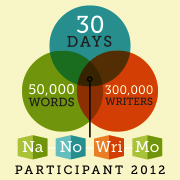
Winner-180x180     Though at the close of November the voyage of this particular novel idea is far from complete, I made several personal observations during this year’s NaNoWriMo that should help me plot a course toward finishing it and will help me prepare for my next adventure.
     Observation One: Writing without a solid outline is less fun than writing with one.
     I can understand the draw of writing by the seat of one’s pants. I imagine it is akin to riding a literary rollercoaster or taking what amounts to a compositional drug-trip. Who knows where the plot will twist today? Let it flow. Who knows where the characters will lead? Follow them. Pansters claim it works and who am I to question it?
     I just do not have the mental and creative constitution for it. This month I started writing with only “The Sentence” (30 words) for direction, and not the outline I usually create. I did not enjoy the process of mental grasping-about that followed. I just need more structure than most. That being said, I am always open to my muse and inspiration. I am not slavishly locked into anything. It is, after all, my subconscious doing the talking and I need to make sure my conscious is listening.
     Regardless, from now on, at the very minimum, I’ll have an outline finished before I start, whether its a skeletal Hero’s Journey, a version of Freytag’s Pyramid, a thumb-nail Three-Act Structure, a modified Kishotenketsu or simply a bloody list of what’s next, but no more vague idea for a situation and a character or two and feeling for the rest as I go along.
     Observation Two: True “cheering sections” are rare.
     Writing can be such a lonely effort. It is a complicated, long term and protracted process paramount to living a monastic life style. That’s why true cheering sections are as important as they are rare.
     I had a close friend who used to ask about my writing whenever we exchanged emails or the occasional phone call. Her questions were always story centered. What was I working on now or how was the story going? Once in awhile she’d ask me to read to her, but only if she felt I was ready. She often signed off with a positive, “I can’t wait to read it!” or something along those lines. What I found wonderful was her ability to communicate her happy faith that I would eventually finish my book, her constant focus on story and her obvious desire to encourage me to keep writing.
     I didn’t realize how important or deeply effecting that kind of encouragement was until it was gone—people change, relationships change, life changes. Regardless, she will always have my undying gratitude for the long-ago gift of her animated interest.
     During my NaNo effort, I had plenty of support from relatives, friends and students, mostly in terms of giving me uninterrupted writing time, which was much appreciated! And to those who contributed financially to the NaNo-cause, YOU ARE CHAMPIONS! There was however an absence of any interest in what I was writing or how it was going, let alone any curiosity about hearing any bit of it that I might want to share. As sad as that was for me, I reminded myself that I compose without it all the time; indeed, I have for most of my writing life. In the end, writing is a solo gig. A cheering section is nice but not required.
     Observation Three: Anyone who is not a writer rarely understands what the process involves.
     It is amazing how many folk think that being part of the “cheering section” means advising: “Why don’t you just finish it and send it to a publisher?” It is also amazing how many of these people offer their brand of support without really understanding that it is not as easy as “…just sayin’.”
     I love these people and they obviously love and care about me, but they need to do their homework or trust that I have. There is so much more to writing than simply recording the story and sending it off to a publisher.
     Observation Four: I am far from finished.
     Though I knew this going in, it has struck me yet again that finishing a manuscript involves so much more than composing 50k. I have an incredible amount of work yet to do. 50k is, at best, only about a third of the way through the first draft of my manuscript idea. Further, I foresee, at the very least, one full rewrite with multiple revisions and edits beyond that will be required. Once I’m satisfied that this manuscript is indeed something I want published and that I have caught all flaws I can detect, then I’ll take it to a group of local published authors or submit it to Holly Lisle’s very strict and professional revision regime the result of which will involve be even more changes, additions and rewrites
I’m sure! This is what it takes to produce something worth reading, something others might want to read.
     Observation Five: I cannot “publish” too early.
     The internet has changed the publishing world in nearly the same way it has changed the recording industry and it is a route I intend to take. Artists are no longer required to kowtow to the whims of a massive, labyrinthine and aloof monopoly. They no longer have to sacrifice control over their own work or cater to a subjective middle man who is himself but a puppet of pop-culture. The flip-side however, is that without the more positive aspects of such a filter—amazing and knowledgeable agents, discerning and intuitive editors, demanding and dedicated publishers—self-published writers have produced a lot, A LOT, of poor writing—a substandard glut that must be weeded so as to find true flowers worth reading.
     There are NaNo-ers, God bless their little pea-picking hearts, who having written their 50k do a minimal spell-check and, with the encouragement of proud yet ill-informed supporters, add their work to the wild garden with a right-click. I will not do this. Quality is the only thing that will make my writing stand out among the crop of millions (I kid you not) and the only way to achieve such is through hard work, heart breaking honesty and a ruthlessness akin to a combat medic’s triage—see observation four.
     I can just hear those who know me querying, “Only five?” No. LOL! Not by a long shot, but these are the five that survived the storm-tossed sea of my seething brain to find a safe harbor after two weeks. Now, onward toward the farthest shore.

NaNoWriMo Note

17 Saturday Nov 2012

Posted by André J. Powell in NaNoWriMo, Observation, The Kraters of Ivory and Jet, Writing

≈ Leave a comment

Tags

NaNoWriMo

          I don’t like writing to my blog during NaNoWriMo as every word here should be a word written on my latest project: The Kraters of Ivory and Jet. I want to leave some word trail and record however, thus, briefly…
     I woke up this morning dreaming about having a difficult time navigating a route that I was used to traveling quite easily in earlier dreams. As usual in the dream world things had changed and I was spending most of the dream trying to figure out the changes and completing my route. Things were fine, I was recognizing my way, until I ran into a gathering of old friends I had recently reconnected with. They were playing a table top RPG without me. I was surprised I’d not been told of the get-together, but not unduly upset. One of the last things I remember about the gathering was that there were two tables. In the progression of the game, a player moved from one table to the other. At the “other” table was one of my friends and a senior student of mine who took it upon himself to demonstrate a certain game mechanic. Amazed that this student was with my friends, I left. Afterward, however things in the dream started to change, my route of travel suddenly without recognizable landmarks.
     In frustration I began rising from deeper sleep to nearly wake up. I began tossing and turning with each fit and start of the dream, asking directions, looking for landmarks and getting involved with other tangents—one of my daughters, my youngest, hiding in a corner and mumbling,
      “I hope she doesn’t see me; oh, I hope she doesn’t see me.”
as an old lady in a ha-jab emerged from an apartment in a tenement.
     It was then that a dream voice said,
      “It’s not that you are having a dream of travel during the course of which the route changes; it is that you are having a dream about a course change. That is, you have never traveled the route without the course change.”
     It was then that I gave up, realizing that this was true because I couldn’t remember where I was going or what it would look like when I got there for the simple truth that I had never been there…yet.

     NaNoWriMo is odd. I write during that month like I wish I wrote at other times. There is something about being connected to a community, though online it is a rather illusionary and ephemeral community. Regardless of its amorphousness, I rise on a weekend at 04:00 to feed the dogs and start the coffee pot and to write—on a weekend!—because I crave connection so much.

     Wrote Cornelia Funke, in her YA novel Inkheart,

Meggie Folchart: Having writer’s block? Maybe I can help.
Fenoglio: Oh yes, that’s right. You want to be a writer, don’t you?
Meggie Folchart: You say that as if it’s a bad thing.
Fenoglio: Oh no, it’s just a lonely thing. Sometimes the world you create on the page seems more friendly and alive than the world you actually live in.

     To paraphrase and perhaps add my own spin…

…it’s just a lonely thing. Sometimes the world [of those who] create on the page seems more friendly and alive than the world you actually live in.

     Maybe that’s it.

Crystal Gazing I

31 Friday Aug 2012

Posted by André J. Powell in Disgusted, Storytelling, Writing

≈ Leave a comment

     Halis had been running so fast, he’d barely made the turn from the narrow lane to the doorway only just catching himself on the frame.
     “Morwin! A ship…from the west…has entered the harbor!” He panted, his eyes bright with excitement. Morwin’s frown was instantly replaced with pleased shock. He stood slowly staring into his friend’s grinning face. The leather work fell to the floor forgotten. At the same moment they both glanced at the carefully preserved wooden casket on the high shelf, its three wax seals covered in dust.
     “Then the day has come,” Morwin whispered. “I…I can hardly believe it.” Halis nodded eagerly.
     Wonder reigned but momentarily.
     “Go!” ordered Morwin briskly. “Awaken Sarli. If marks on the portal indicate she’s…engaged, do not hesitate to interrupt her. Her wrath will be ten times more terrible if she thinks she’s not been told of this in a timely manner.”
     “Oh, do not worry,” Halis smiled, as if the idea of interrupting even a hedge majai in full Weave was something he did daily. “It will be my pleasure.”
     “Do not antagonize her, Halis,” Morwin warned placing his warn handled tools quickly yet carefully in their storage box. “If we are to be successful, much depends on her.”
     “I? Antagonize?” Halis feigned shock and hurt. “But she is my love, my life, my one and only–”
     “—only she doesn’t view you quite the same way,” said Morwin wryly, untying his heavy leather apron and hanging it on its peg.
     “Is there anything so sad as unrequited love?,” mourned the dog catcher mockingly.
     Morwin chuckled in reply and shook his head, but instantly sobered taking a long look about the room that had been his life for so long now. But a ship, a western ship, has come, he thought to himself.
     “Away with you,” he said shaking way the false nostalgia. “We have much to do.”
     Halis grinned again, nodded and disappeared.
     Morwin contemplated the empty frame where his friend had stood but a moment before. He hoped Halis would forgive him when the night’s events unfolded as unexpectedly as Morwin had planned they would.
     “It is for the best…” he reminded himself as he turned toward the shelf—were his fingers trembling, ever so slightly, he wondered—and reached for the damned casket.

What do I hope to get out of my writing?

15 Sunday Jul 2012

Posted by André J. Powell in Observation, Rant, Reading, Writing

≈ 1 Comment

Tags

Holly Lisle, How To Think Sideways, Reading

Though I have posted very little over the last couple of weeks, it is not for lack of writing. I have been brain-deep in Holly Lisle’s “How to Think Sideways” course endeavoring to squeeze as much from my investment as possible. I must say that to do so has required as much dedication, patience and work as any course I took during my college days if not more! And so far, I have learned a lot.

In one of her writing tip newsletters, Holly challenged her students to, “know themselves As A Writer.” The first of two questions she posed to pursue this challenge was a doozey: “What do [you] hope to get out of [your] writing?” I had never really thought about that.

Since I was about nine or 10, I had expressed the desire to write a book. That goal in and of itself was enough to keep me content and journal writing and world building for years. I made no serious differentiation between what it was to write a book and what it meant to publish one until I was significantly older. Up until that point and beyond writing a book, I had never considered what I wanted from my writing.

In a conversation with my wife the other night, I flat out said, “Sometime in the near future, I’d like to quit full-time teaching and write professionally.” This was a bold statement; one that reminded me of the first time I had the guts to say, “I am a writer.” We spent a part of our conversation on what doing so would mean and require and how it might be done. One of my wife’s points had to do with publication. We discussed the merits of short story or essay publication and that, in her opinion, I might need to do that before I tackled selling a book. We came to no conclusions or even agreement, but it was good food for mental chewing and perfect fodder for the above question. While I do not think a career change and publication are a complete answer by any means to what I want get out of my writing, apparently it is two very important facets.

On a very basic level, I suppose I want the prestige of writing and publishing a book, regardless of how well it does monetarily. As a child I saw authors as quasi-divine kami of parchment, ink and idea, who literally worked magic: creating worlds, legends and myths. I wanted, and still want, to be a member of that club.

As with many who have reached the half-century mark and beyond and who admire fantasy and adventure fiction, the urge to do so came after reading Tolkien. I believe I had an advantage over many who have since encountered the modern myth, because prior to reading about Frodo and Middle Earth, I had read The Bible, Le Morte D’Arthur, The Odyssey, The Táin Bó Cúailnge, tales from the Book of Invasions, Ivanhoe and numerous Native American myths (particularly stories of The Sacred Pipe and White Buffalo Calf Woman). Pretty heavy stuff for a ten year old. Some might question this, but let me hasten to point out that in my neck of the woods and at that time, television only had three channels and no 24-hour continuous broadcasting. Stations used to “sign-off” right around midnight. Selections were limited, to say the least, so when I say there was nothing on T.V. worth watching, boys and girls, I mean there was NOTHING on T.V. worth watching. The only alternative, if one’s friends were busy, was reading, which is exactly what I did.

Thus, I came at Tolkien from a distinctly different point-of-view than most modern readers do. The modern mythology that Tolkien created blew me away. The merits or demerits of the plot were not issues I entertained yet, but what I could appreciate due to my reading habits was his depth of background and cultural constructs. I felt like I was reading Beowulf or The Iliad wherein I could sense deeper tales hanging like shadowy backdrops upon which the action took place—the story of Finn in the former and the war of the gods in the later. Poems half written—The Falls of Nimrodel, and the Lay of Gil-Galad—that I could tell were written somewhere in full. It was like a eureka moment for me to think that a modern writer could make myths on par with Gilgamesh or the Icelandic Sagas. I don’t know why I had never entertained such a thought before; I guess I just thought all the cool stuff had been written and now folk wrote books like the Happy Hollisters, The Hardy Boys, Nancy Drew and boring “adult” stuff I wasn’t even remotely interested in. From the moment the Company of the Ring stepped into Moria and Gimli sang part of the Song of Durin,

The world was fair, the mountains tall,
In Elder Days before the fall
Of mighty kings in Nargothrond
And Gondolin, who now beyond
The Western Seas have passed away:
The world was fair in Durin’s Day.

I began imagining my own mythology. The Silmarillion with its elevated style confirmed what I sensed lay behind LotR… what I now found to be just the tip of Tolkien’s mythological ice-berg. It sealed the deal: I would one day create my own mythology and write a book.

RANT WARNING: On a side note, the excitement of The Silmarillion’s publication made Christmas of 1977 particularly merry for me: more maps, more legends. By that time there were more T.V. channels, but thankfully I was hooked on reading and normally sought my entertainment from the page rather than the tube. I want to emphatically state here that I had few problems reading the more elevated style of Tolkien’s posthumous publication as many would-be readers do today. I would argue—and I know I’m going to step on toes here with my assertion, but I will swear upon my life it is true and after having more than 3000 students pass through my classroom over the last 20+ years, I know whereof I speak—I would argue that because I was not raised with television and movies as my primary source of entertainment, I was literate and skilled and critically minded enough to appreciate The Silmarillion for what it was. 30-plus years ago, peers to whom I had introduced the LotR did indeed struggle with the tome. Ultimately they complained that they expected more of the same, another adventure like Frodo’s. A few who had been raised on reading however, did slog through and admitted it made their reading of LotR all the more enjoyable. 20 years ago, students who had read LotR, complained to me that The Silmarillion was just, “…too hard to read…why did [he] make it so hard?” It was the same complaint they leveled against the Bible, the Torah, the Koran, the Greek Myths, the Matter of Britain, 1001 Arabian Nights, The Worm Ouroboros, etc. Today, many of my students complain that the reading of LotR is “…too hard…” to give it a go, that they would rather watch Jackson’s interpretations over and over or read easy YA. As for The Silmarillion? I don’t even mention it anymore. It would be paramount to assigning the Rosetta Stone as literature as far as they are concerned. What has happened since 35 years ago and now? It is so obvious, I will not even mention it here. The willful dumbing-down of society makes me weep especially because so much of it is deliberate ignorance chosen because “it’s too hard” (add the whine) and, mark my words, as a result society will suffer a descent no less deep and no less permanent than that suffered by Rome. The only difference is that ours will be based on illiteracy and the expectation that everything must be easy and rewarding or it is not worth doing.

Thank you, mother! Thank you, thank you, for putting your foot down and forcing me to read Le Morte D’Arthur at age seven, for shoving a book into my hands and shutting off the television! Of all the gifts you gave me, this is the one I treasure most. Rant over.

During the interim between those halcyon days and those I live now, I learned how important the storyteller is. Tolkien had contemporaries who were great mythmakers: C.S.Lewis, E.R.Eddison, and Lord Dunsany. Indeed there were storytellers who preceded Tolkien such as William Morris, the great pre-Raphaelite painter, architect and designer, who had a strong influence on Tolkien with his “prose romances” of which I read The House of Wolfings and The Roots of the Mountains. Howard, Burroughs, Norton, DeCamp, Moorcock, LeGuin, etc., etc. came after, their works impressing me over and over as to the critical role of the storyteller as modern mythmaker. Today the same is true, fantasy or fiction, historical novels or romance, be it stories of female bounty hunters or possession by aliens from a distant star, each requires a good storyteller. I have ever argued that there are no new stories, but there are new storytellers…mythmakers who with their unique voices and wizardry can take well worn archetypes and refurbish them strong and shining. I want to do that too. I find nothing in this world so rewarding or fulfilling, as telling my students a tale that they listen to with rapt attention and are eager to hear the finish of…even staying a few moments after the bell has rung to “hear the rest. The high is incredible. I yearn to tell a good tale, a story people want to read and feel they have not wasted their time in the reading.

At the end of my life, and here in the winter of my time on earth that thought is much more real than it was in my 30s, I suspect I will have far, far less creative successes to feel satisfied with than I will regrets. I do not, however, want this to be one of them. I want to relax into the arms of death content in this at least: that those who mourn my passing will remember me as a good storyteller, a mythmaker, a yarn-spinner…that I did what most folk only talk of: I wrote books and they were good tales. I want to look back and say, “I did it,” not, “I wish I had…”

Thus, “What do I hope to get out of my writing?”:

I hope to create a second career.

I hope to create my own myths and mythology.

I hope to tell good tales and publish them.

I hope to scratch the creative itch.

I hope to give my passing from this life some satisfaction.

Focus: My Biggest Challenge

03 Tuesday Jul 2012

Posted by André J. Powell in Observation, Storytelling, Writing

≈ Leave a comment

Tags

Brent Weeks, Holly Lisle, How To Think Sideways, Night Angel

I am seldom without a story idea. Some ideas are good, some are mediocre and some, upon retrospect, are just plain stupid. Thus, I rarely have a problem with coming up with something to write about. What I do have a problem with however, is staying focused, keeping my mind on the story at hand and my fingers on the keyboard channeling it from my attention-challenged brain to the ‘page.’

As my summer writing project, I am going through author Holly Lisle‘s “How to Think Sideways” writing course and a goal of the lesson I am presently working on is to identify my writing “Sweet Spot.” From this spot, a writer is be able to compose more comfortably, creatively and with more focus regardless of genre or requirement—a good skill to have considering today’s lightening fast and ever changing market. Thus, I was delighted to read author Brent Weeks’ July Writer’s Advice post on the subject of “Staying Focused.” As I read, I immediately saw parallels and connections between writing from the “Sweet Spot” and maintaining focus.

I’m not a big fan of re-posting (it kinda feels like cheating to me), so I offer a link to Brent’s site and the blog in question. The article may not have the same impact on others as it did me considering my present project, but it is a good article nonetheless containing excellent advice and concrete strategies for the focused-challenged writer.

I have heard that some author’s want their blog missives re-posted (credit being given where credit is due, of course) to presumably boost traffic to their sites (?). I’m not sure about that ‘tribal’ blog tradition and will have to look into it.

As an aside, I am about a fifth of the way through Beyond the Shadows, the last book of Brent’s epic fantasy “Night Angel” trilogy, and heartily recommend the set for a fun summer read.

Realistic Fantasy or Why I Prefer the Oxymoron: Aesthetic-Distance and the Suspension-of-Disbelief

18 Monday Jun 2012

Posted by André J. Powell in Observation, Storytelling, Writing

≈ Leave a comment

In my last post, I complained that V.M. Manfredi seemed to have trouble deciding if Spartan, A Novel was a fantasy story with a historic background or a historical fiction with fantasy characteristics. I stated that, in my opinion, the two genres do not mix well without careful forethought and that, considering how Manfredi handled the subject, the book would have been better as one or the other.

Considering my lack of credentials, this is a bold statement. It is not however uninformed. I would like to extrapolate on the reasoning behind my critique and on why I feel it is so important for writers and wannabe writers (like myself) of fantasy to consider Aesthetic-Distance and the Suspension of Disbelief, two concepts I learned long ago in a film analysis class and which are applicable to many an art form including that of writing.

From the onset however, I want to refer any reader who as a result of reading this entry feels duty-bound to defend their favorite author, genre or sub-genre to the “About” tab at the top of the page. I am not interested in trying to convince anyone of anything here. I am interested however, in exploring my own tastes and biases as I journey toward publication. Further, I realize that what follows here is paramount to declaring, “I think vanilla frosties dipped in chocolate are the best.” There is no surer way to inspire someone to riposte with, “…chocolate until I die!” or “twisties forever!” or even the odd “…strawberry, if you don’t mind!” than to say such. Please understand, I am not declaring what is best here so much as what I prefer. All flavors, well written, are good flavors.

I would also like to offer a Spoiler Alert as well. To make my point, I will be referring to critical events in Manfredi’s Spartan, A Novel, Martin’s The Game of Thrones and R. E. Howard’s Hour of the Dragon AKA Conan the Conqueror during the course of this essay. Those who have not read the above but plan to should proceed with caution.

To begin then.

I prefer fantasies best that have a certain ring of truth and realism to them, that sink their roots deep into the rich and firm soil of reality as apposed to those that freely embrace the more fantastical characteristics of the genre and are therefore more un-real. Though this sounds contradictory, I assure you that it is not. It is an extremely important distinction and I hope to eventually publish fantasy stories that bear its hallmark. This is why, I believe, Tolkien’s LotR has such appeal. The “Beowulfian depth” upon which it is built gives Tolkien’s work a ring of authenticity appreciated and admired by most readers. Magic, while it abounds, is nonetheless held in check and allowed to function as background rather than as essential.

That being said, any fantasy work founded on some sort of internal logic, that is in agreement with itself, is appealing to me. Regardless of its fantastical nature, as long as there is a consistency to which the author faithfully adheres, I will read and enjoy it.

This consistency is highly important to me because, as far as I am able, I want to create a faux-reality in which my readers can fully and comfortably immerse themselves. Like a good masseuse, I want to offer my clients an enjoyable experience without interruption, without pain, without jarringly cold hands. I want my readers to give themselves up to my ministrations and to suspend, for a time, any objections they may have, any doubts that the world I present them is not “real,” or that the story I weave for them is not sound, or that the characters therein are not convincing. To do this well, I must establish an Aesthetic-Distance between the reader and myself in which they feel comfortable enough to establish a Suspension-of-Disbelief.

Basically, “Aesthetic-Distance” is the concept that the reader or viewer is presented with material in such a way that a bridge is established between the reality of reading a book or sitting in a theatre and the un-reality occurring on the screen or page before them. The patron enters the theatre or opens the book knowing from the onset that what he or she is about to see and/or read is not real. They know for example that they are sitting in their living room or in a theatre, in their home town, in the 21st century, BUT for a time, they voluntarily agree to suspend their disbelief and accept what is happing on the screen or page as “real.” That there is indeed, “A galaxy far, far away.” In return for this suspension, the director or writer agrees to offer a presentation that is realistic to an agreed upon degree. The greater the degree of suspension required upon the part of the audience, the stronger the Aesthetic-Distance established by the director or writer must be.

Take for example, King Kong. Movie goers agreed to suspend their disbelief, firmly grounded in the reality that there are no 25’ tall gorillas (Jackson size—my preferred version). In return the director did his best to established an Aesthetic-Distance that treated the viewer to a believable 25’ tall gorilla and a story that did not threaten this agreement. If, however, should that distance erode at any time during the presentation of the story, the viewers’ Suspension-of-Disbelief collapses and the viewer is not longer in the jungles of Skull Island but in the reality of their theatre seat where Kong has become a mere special effect. While it is true that no director or writer can please all of the people all of the time, it should be their overriding concern to do so or at least labor to make such breakdowns of the Aesthetic-Distance as few as possible.

A chef is no less responsible when creating an excellent meal and must do all within their power to keep the patron engaged by serving the best dish possible. Based on the description in the menu, the chef and the patron enter into an agreement. The patron expects a certain dish and the chef creates said dish, albeit with individual style and flare yet still within certain parameters. No chef or writer would present their work as Penne al’Salmone or an action adventure and then serve tuna salad or offer a romantic comedy. That is obvious. What is not so obvious however, are the smaller interruptions and disruptions that though subtle nonetheless chip away at the Aesthetic-Distance and threaten the Suspension-of-Disbelief.

If during the course of the meal, I discover a fish bone in my Penne al’Salmone, I am a bit disappointed, but thankful I did not swallow the damn thing, and though I do not send the dish back, my enjoyment of the meal is interrupted. I will continue to eat and if I do not find another bone in my fish pasta, I will soon forget the disruptive moment as I immerse myself once again in dish’s savor.

If however, I find another bone, I will think seriously about ever ordering the dish again. I many not push my plate away,—I did pay for it after all—but my dining experience is now seriously challenged as I eye my food warily, picking at it with a fork, examining each bite alert for another bone. I am now almost completely removed from the experience the chef intended me to have with his meal.

Should I have the unhappy fortune to discover more bones as I gingerly chew in anticipation of such an advent, any pleasure I had in my eating experience prior is now irrevocably lost and I am most decidedly through with both the meal and the restaurant or, by extension…the movie…the book.

The fantasy writer has no less a responsibility to the reader as the chef does to the diner or the director to the movie viewer. Each of these professions has its own special dynamics that the others do not, but the common concern for patron enjoyment is arguably there regardless.

It is my belief that how seriously the writer wants the reader to consider their fantasy (or any other genre-plot, for that matter), depends on how sensitively the elements of fantasy, in particular the magical creatures, the magical artifacts, the magical situations and magic itself, are treated. How sensitively is measured by degrees of expectation on the readers part and this has much to do with the subgenre of fantasy being read. High fantasies rich in magic, Erickson’s The Malazan Book of the Fallen series for example, may have less pressure placed upon them by the reader because they expect dragons to abound, fairies to appear, lightening to spark from a wizard’s finger tips and gods to walk the earth.

If in a lower fantasy novel, however, such as Robert E. Howard’s sword and sorcery tale, Hour of the Dragon AKA Conan the Conqueror high fantasy elements were suddenly to appear without rhyme or reason, say a fire-breathing flight-capable dragon aiding and abetting the Cimmerian’s bid to reclaim the Aquilonian throne and destroy the sorcerer Xaltotun, it would render the Aesthetic-Distance moot and my Suspension-of-Disbelief would collapse. I am not suggesting that a dragon is taboo so much as pointing out that Howard would have had to have been at great pains prior to make the dragon’s sudden appearance acceptable. Howard did in fact present large lizards his Cimmarian referred to as “…dragons…” in “Red Nails,” but he was quick to make it clear to the readership that in all likelihood the creatures were dinosaurs left over from some earlier age.

Even in such epic fantasy novels as the Lord of the Rings (which walks a fine line between high fantasy characteristics yet, save for certain features and artifacts, maintains a relatively low magic profile), Tolkien was very careful not to stray too far from the characteristics of epic wherein he cast his characters. Gandalf does not wield spells in a DnD-esque fashion, Smaug is depicted as both a rare one-off and as the penultimate cataclysmic danger a dragon should (IMHO) represent, magically sealed doors operate according to strict enchantment and the culturally supernatural and inherit abilities of the elves are limited by internal logic—even bloody Gil-galad fell to Sauron’s power. Tolkien worked hard to maintain the Aesthetic-Distance between his readership and his material and as a result, the Suspension-of-Disbelief on the part of his readers was rarely threatened. For me, Tolkien maintained tone throughout his work, sometimes less successfully than others—where in the hell did Tom Bombadil come from?! (call it a fish bone)—but satisfactorily overall. Too many fish bones however, too many challenges to the Aesthetic-Distance might have rendered my suspension of disbelief impossible and he might have lost me.

This was the argument I had with Manfredi’s Spartan, A Novel.

SPOILER ALERT…SPOILER ALERT…SPOILER ALERT…SPOILER ALERT…SPOILER ALERT

Manfredi used the fantasy/divine element of prophesy quite often in this novel and with, for the most part, good effect. It moved the main character Talos/Kleidemos from situation to situation even as he too, like the readers, struggled to discern between what was a message from the gods and what was a hoax. Were they truly divine in origin or simply a means by which the Athenian or Spartan governments justified and achieved political ends? As Talos struggles with this, he is made all the more sympathetic by Manfredi as he wonders why he has been handed this fate and rails against it aching to be reunited with his life-long love Antinea, who is pregnant, and raise their child together in peace. At the end of the novel, Talos, now the leader of the Helots, decides on a desperate foray against an all-encompassing enemy and though his people fight heroically and admirably, they are ultimately out-maneuvered and prepare to suffer the fatal consequences. At the last moment however, they are saved by a proclamation from the Delphinine Oracle that smacks of political intrigue on the part of the Athenians against the Spartans.

While a somewhat startling last-minute save, it is not unlooked for by the reader or too unexpected. Manfredi has been at exceptional pains to weave prophesy into his story and to instill the reader with a suspicion of such prophesies as well as, an expectation as to their advent. Indeed, he has foreshadowed just such an incident with other prophesies that occurred earlier in the story, and because of this, the Suspension-of-Disbelief on the part of the reader remains intact. Thus, the Aesthetic-Distance has not been violated was it would with the sudden and actual appearance of Zeus or a decisive and ridiculous victory on the part of essentially peasant militia over trained hoplite Spartiates. Indeed, such would have smacked of a deus ex machine…a major fish bone…leaving the reader with a “WTF?” too big to swallow. Unfortunately, on the heels of the saving prophesy, Manfredi does exactly that and serves up a Moby Dick sized fish bone.

After the prophesy is relayed to the Spartan king and the Spartan troops withdraw, Talos/Kleidemos cannot be found. Fearing him dead, a close companion searches the battle field in vain for the body of his comrade. Calling for his friend, he is unexpectedly met and purposefully led by a huge wolf to where he finds Talos/Kleidemos’s singular armor, epic weapons and shield laying at the foot of a tree. The wolf disappears as suddenly as it appeared. Talos is never seen again, but his companion weeps understanding that Talos was an avatar of the gods and proclaims that Talos the Wolf will come again as his people need him, ala King Arthur.

Blink–WTF?—hack, cough: tink! Huge fish bone. He was an avatar? He was a construct of the gods? Well, what the hell have I been worried about him all this time for? If he’s an avatar, he’s not even mortal! What the hell do I care whether or not he rises above his destiny and is rewarded with hearth and home? He was a shape shifter? Where did that come from? Suddenly the Aesthetic-Distance crumbles under the stress placed upon it by Manfredi and with it my Suspension-of-Disbelief. It was just too much for my intellect to reconcile: there was no warning, there was no foreshadowing. Sure there were wolves present throughout the story, sometimes they seemed to favor Talos/Kleidemos but not in any way to hint that he might be a shape shifter let alone a Christ-figure. As a result, Spartan, A Novel receives a three stars rather than five from me. At this point I am curious enough to try a second Manfredi novel, but frankly, I will be very skeptical as I read and at the first hint of a fishbone, I am putting it down.

SPOILER ALERT…SPOILER ALERT…SPOILER ALERT…SPOILER ALERT…SPOILER ALERT

This experience was repeated with Martin’s initial offering in the A Song of Ice and Fire series. He is so good at the historicity of his story; I ate up the Game of Thrones at a record pace. In keeping with that established flavor, the gods are kept at a distance, magic though burning in the background remains in the background, his characters are human, engaging and believable. The evil Beyond the Wall, like a simmering crock-pot of soup, is slowly and deliciously turning into what is sure be an epic meal. Armies are on the move, dealing with the needs of man-power, maneuverability and access. The characters wrestle with alliances, betrayal, self-realization and, in some cases, mortal defeat. This rocks! I thought and then suddenly: BAM! A main character finds herself not only immune to fire, but “mother” of three dragons who are suckling at her breasts (cue the loud record-scratching sound)—What was that?!

Yuck, cough, choke—WTF!? Where did that come from? I think I actually cried out, “Awww, c’mon!” And why the hell…? Cheap titillation at this late date? For cryin’ out loud, Martin, you’ve all ready sold me; I don’t need the cheap sex tricks! Where’s the foreshadowing on this one (thumbs rapidly through the pages)? Yes, yes I knew the eggs seemed warm when she touched them, etc., but there are some things I want to know before I swallow this sudden, unexpected and disturbingly boney slice of fish. For example, how can viable embryos survive, arcanely or otherwise, in a fossilized state for hundreds, maybe even thousands of years? How the hell do they even know how to nurse? Do any reptiles anywhere on the FRACKIN’ planet nurse? I mean, it is fantasy, but come on, there are certain biological realities to consider here! How is it that the character, who’s beloved just died and has just survived a conflagration, as well as a purge, is not practically incoherent or at least freaking out over three lizards competing over her tah-tahs?! The situation and resulting questions so jolted me from the storyline, so instantly and completely, that I found I had lost all interest in reading the next novel and even felt a bit betrayed. So much of the novel was so good, so carefully rendered, this…this just seemed so random and so cheaply sensational. I finished up the first book three years ago and have not gone back.

By no means am I suggesting that Martin did not have the right to tell his story the way he wanted to or that he should not have used the dragon element. No way. It’s a fantasy novel: his world, his rules. If he wants to do that, more power to him. The point is, to me, he failed in his responsibility to present his dragons in such a way that maintained the Aesthetic-Distance and allowed me to continue my Suspension-of-Belief there by enjoying his story. Martin had built an expectation that he would honor the well conceived milieu he had heretofore described. By presenting his dragons in such a surprising and fantastical way, he challenged my disbelief and the distance failed. I see no reason why he could not have done it a bit more carefully and logically—utilizing magic in all its indefinable and all-encompassing qualities—wherein it could have matched and even complimented his gritty realistic and painstakingly rendered fantasy. Even if I had been able to swallow the bone, he would a serious job ahead of him, in reconciling the two elements: realism and fantasy, especially when those dragons come of age, considering at 18” and barely infants, they are already able to torch a man to death and melt iron manacles with their breath.

And herein lies the rub: if he’s willing to present such challenges to my disbelief now, who knows what is in store? Am I willing to risk another $7.99, 800 pages and the time to read them to find out? Do I even want to? Not at this point, but my wife loves the HBO series and I love my wife. I refused to sit and watch the first season but have consented to watch the second with her only on condition that I can leave the room without derision if I feel things are even remotely approaching critical-fish bone status.

I am but one reader and in the end my opinion accounts for nothing save to myself—and by extension, I know what I like. He lost me: big deal, so what? A clash of aesthetics. Others are head over heels for him. Maybe my standards are too high; others are more flexible. An author cannot please everyone every time. I am sure his pocket book and ego can handle my checking out and this is not a critique of Game of Thrones.

I feel that the more believable an author wants their fantasy to be, the more care they need to take in presenting it. I believe the more fantastic in nature a fantasy is, the more responsibility to keep a tight rein on the fantastic elements an author has. Note I did not say eliminate them, but I think fantasy writers have a particular burden and must beware of magic getting away from them or it either becoming a crutch or a plague. Magic and fantastic elements allowed to run amuck without rhyme or reason can ruin a well thought-out and realistic story line. I have found, for myself that if the fantasy leans toward the realistic, those elements used sparingly AND LOGICALLY are like sweet savor leading to many an “Mmmmm, yummy” moment, but then again, I am a self-proclaimed lover of realistic-fantasy. Even if it is a magically rich environment however, wherein every character has access to magic in one form or another and the supernatural is common place, the author still has a responsibility, if not more so, to the Aesthetic-Distance between the material and the reader and the Suspension-of-Disbelief. It still must be well considered and presented with sensitivity and with an eye toward logic. If not, the author risks losing his or her reader the moment they pause and wonder, “Where the hell did that come from?” or “How does that bloody work?” or “Really? Really! Really.” Challenged enough times and the reader is lost. One fishbone in my “Penne al’salmone” filet is enough, two and it goes back to the kitchen. Three and I most likely will do my dining out elsewhere.

On the Death of My Writing Father

07 Thursday Jun 2012

Posted by André J. Powell in Class Room, Observation, Reading, Retrospection, Storytelling, Writing

≈ Leave a comment

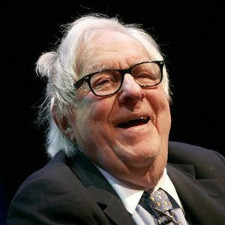
The day began with email from a former student and long time friend. It was short and to the point, but he knew it would speak volumes to me.

“RIP Ray Bradbury. Shitty day.”

After a quick search I learned that…I find it hard to even write it…Ray Bradbury died last night.

The world is a darker place for me today.

Though I never had the great good fortune or privilege to meet him, at the opening of each new school year when I begin Fahrenheit 451 with my honors classes or earlier in my teaching career—The Martian Chronicles with my sophomores, I always feel as if I am hosting the annual visit of a dear old friend and mentor.

During my first years of teaching English, The Martian Chronicles was a unit I always looked forward to exploring and re-exploring with my students. I began teaching in the early 90s and I always got a kick out of my students’ reaction to the titles of the compilation’s loosely related Martian tales. They would predictably chuckle at the dates—“January 1999—Rocket Summer” and “February 1999—Ylla” and so on and so forth as Bradbury proceeded to describe a technology that was to him at the time he penned the tale cutting edge and exotic but to my 16-year olds, who considered Star Wars a relic of their elementary school days (and later their parents’ era), archaic, rather quaint and therefore funny.

That was fine however, because it was my entry-point to a discussion of how science fiction had influenced our society and our lives. When they understood that the master writer had penned his opening tale in 1947, two years after the end of WWII and Hitler’s V2 rockets, ten years prior to Sputnik I and more than 20 years before Armstrong and Aldrin walked on the Moon, their amusement always turned to curiosity if not outright respect. Thus, would begin an exploration of Bradbury’s Verne-ian vision, his prosaic turn of phrase, his mastery of description, his social insight that would culminate in our own imaginary exploration and colonization of Mars. I still have some of the work produced by students who, as we imagined setting up our own outpost of humanity on Mars, were forced to deal with the same challenges, moral dilemmas and ethical conundrums as faced by Bradbury’s protagonists. We set up pretend societies and developed faux cultures, exotic alphabets, New Martian laws and institutions. One year a class accused another class’s colony of “war-crimes” against the indigenous Martian population. Another year and a student imagined the political campaign of a New Martian faction that advocated succession from a Terra Ferma that, as she passionately put it, “…burned books, polluted the air and oceans and refused to learn the lessons of its history.” I think Spender would have been pleased.

I look back on those days with great fondness. Bradbury, though in his 70s, was alive and writing, his literary ideas and intellectual challenges resonated with my students (as they will forever). I was younger and full of an idealism that seemed to feed off his writing. It was a glorious time. My copy of the Chronicles was a 1963 edition published by Time Inc. It included stories that later editions would not have: “The Fire Balloons,” “The Wilderness,” and the provoking “The Way in the Middle of the Air,” which would later in the year dovetailed so splendidly with To Kill a Mockingbird. I understand that a The Martian Chronicles: The Complete Edition has since been published with a section entitled “The Other Martian Tales” which includes 22 additional stories, some unpublished. I hope to read them one day.

I mourn his passing as a member of his extended literary family of would-be writers who took inspiration from his example, his extraordinary voice and wonderful visions. His Zen in the Art of Writing was my constant bedside companion for many years. My copy is marked, highlighted and underlined chronicling my own search for a Muse worth writing for. I regret never having heard him speak. Not long ago there was a writers’ conference in southern California wherein he spoke at a dinner event. Though tempted I decided against attending due to the price, time and distance. How deeply I repent that decision now. I’d always hoped to tell him, in some way or another, of his influence on both my teaching and my writing aspirations. I should have at least written. I would have loved to had him sign my copy of The Martian Chronicles; it would have become a family-treasure! As it is, I’ll have to settle with this small tribute, re-reading his works and searching out digital recordings on the Internet. Take a lesson, Andre’ :-T

His passing reminds me that time waits for no one and that the end of an epoch approaches. Only a few of the writers who made serious inroads into my heart and mind during that magical time when the young truly “discover” reading what they want to read as a unique and singularly powerful and empowering privilege, still remain alive: Larry Niven, Jerry Pournelle, Michael Moorcock and Jack Vance—authors who along with Clark, Asimov, Heinlein, Herbert, Tolkien, Zelazny, Norton, Lewis and Leiber (themselves the prodigy of Howard, Lovecraft, Burroughs and the like) will forever stand tall in my dreams, all my “Writing” fore-bearers, grand parents, aunts and uncles.

I will never leave such a literary foot print as Bradbury, to whom I owe so much for my teaching, as well as writing, inspiration, but if I plan to leave any literary mark at all, be the writing-son I want to be, I must release my doubts, put away my apprehensions; I must damn the naysayers who tout “…too late…too old…too overdone…too cliché…too quaint…too passé…” I must, as the master put it, order my doubts to, …stand aside, forget targets, let the characters, your fingers, body, blood, and heart do (Zen 139). I am thankfully reminded of his poem Troy…a gift wherein I have always found comfort and inspiration. I hope I will be forgiven if I quote it in full here.

My Troy was there, of course,
Though people said: Not so.
Blind Homer’s dead. His ancient myth’s
No way to go. Leave off. Don’t dig.
But I then rigged some means whereby
To seam my earthen soul
or die.
I knew my Troy.
Folks warned this boy it was mere tale
And nothing more.
I bore their warning, with a smile,
While all the while my spade
Was delving Homer’s gardened sun and shade.
Gods! Never mind! Cried friends: Dumb Homer’s blind!
How can he show you ruins that n’er were?
I’m sure, I said. He speaks. I hear. I’m sure.
Their advice spurned
I dug when all their backs were turned,
For I had learned when I was eight:
Doom was my Fate, they said. The world would end!
That day I panicked, thought it true,
That you and I and they
Would never see the light of the next day—
Yet that day came.
With shame I saw it come, recalled my doubt
And wondered what those Doomsters were about?
From that day on I kept a private joy,
And did not let them sense
My buried Troy;
For if they had, what scorns,
Derision, jokes;
I sealed my City deep
From all those folks;
And, growing, dug each day. What did I find
And given as gift by Homer old and Homer blind?
One Troy? No, ten!
Ten Troys? No, two times ten! Three dozen!
And each a richer, finer, brighter cousin!
And in my flesh and blood,
And each one true.
So what’s this mean?
Go dig the Troy in you(150-1)!

Good-bye, my Writing-sire, and though, as you quoted Byron in “June 2001—And The Moon Be Still As Bright,” …we’ll go no more a-roving,/So late into the night, I will continue to dig for my Troy, my Tanelorn, my Camelot…my own Martian city wherein the denizens celebrate exotic festivals and, “There are beautiful boats as slim as women, beautiful women as slim as boats, women the color of sand, women with fire flowers in their hands…” (Martian 107), long wine-filled canals, towers of bone and crystal, with “…great friezes of beautiful animals, white limbed cat things, and yellow-limbed sun symbols, and statues of bull-like creatures and statues of men and women and huge fine-featured dogs”(85). I will dig and succeed to whatever measure and in whatever form Fate and my Muse and my Desire see fit to afford for me. Thank you, thank you, thank you for your words, your visions and your inspirations, my writing-father. Because of you, the moon will forever be as bright and Mars as real as the moon.

So, we’ll go no more a-roving
So late into the night,
Though the heart be still as loving,
And the moon be still as bright.

For the sword outwears its sheath
And the soul wears out the breast,
And the heart must pause to breathe,
And love itself have rest.

Though the night was made for loving,
And the day returns too soon,
Yet we’ll go no more a-roving
By the light of the moon.
–Lord Byron, 1817

Bradbury, Ray. The Martian Chronicles. New York: Time Inc., 1963.
Bradbury, Ray. Zen In the Art of Writing. New York: Bantam Books, 1990.

I Feel As If I Haven’t Written In Years

19 Saturday May 2012

Posted by André J. Powell in Class Room, Observation, Writing

≈ Leave a comment

I feel as if I haven’t written in years. Nothing, of course, could be further from the truth. I haven’t written on my manuscripts in months would be more accurate. The last month of the school year has arrived and that mixed feeling of giddy exhilaration and profound sadness has eclipsed my creative efforts. I’ve continued to read and study Kress’s Characters, Emotions & Viewpoints. I’ve husbanded a fledgling student writing group at school. I’ve begun a farewell-fairy tale for some of my students whom I will miss very much, but I’ve made little or no progress on Scions; indeed, I’m near giving up on it and turning to other projects. What those other projects are, I have no clue.

Thus, I’m out of sorts and out of discipline. I am tired nearly all the time…dangerously so. I am always like this during the last four weeks of school. As an advisor for student council, my work load grows exponentially, particularly with the advent of prom (an all encompassing event at our school) and student elections. I am also a member of various committees: Leadership, Safety and APIP and each of these demands its due with year-end meetings and wrap-ups. But in the end, I am still a teacher and dazed that I still have so much to do, amazed that any one could possibly think I’ve extra time on my hands to do anything else and dismayed that what time I have left is not enough! I am also so angered by the attitude some teachers and parents in the district have who feel that after STAR testing the year is over.

“Sorry folks, but there’s still six weeks left. My seniors and sophomores need tending: their drama, their grades, their plans, their ever-shortening attention spans need attention. We have goals and your ‘all done!’ attitude is not helping.”

Bastards.

I have to admit however, that I am growing restive and am looking forward to the end of the year. That being said, I find I am having to command myself to concentrate, not simply on work but in order to control my growing inner sadness. I’m ready for summer to begin and to enjoy the freedom it offers me, the rest and rejuvenation, but I’m not completely ready to say “good-bye” to my charges. So much drama, so much emotion, so much time invested: some with effect, some wasted, but I will still miss the various tribes within my jurisdiction, the L.A.V.A.s, the Fairy Queens, the Heroes and the Fosterlings, with bone-soul fondness.

Ah, my L.A.V.A. poets, writers and wannabies (and those who simply want to hang out with such), especially my senior L.A.V.A.s who I just got to know just this year, I will miss you. Who would have thought that an abandoned house on Loon Lake could have brought us together so tightly. How I will miss our afternoon discussions. No web-forum will ever replace our fun filled afternoons.

Beto, my ruggedly handsome giant, foot ball player, enforcer, body-guard, and lady-killer, who would have thought you were such a deep thinker. What marvelous poet you are. The rhymes literally pour from you. Keep seeking your voice, my brother. It has so much to tell the world.

Theresa with that hilarious sense of humor you must share! You drip ideas and plots like dew. All you need to do is concentrate on one flower and I’m sure it will blossom into the story you are looking for. Forget the naysayers…go and be the writer you dream of being.

Brandi, with that goofy anime puff fob hanging from your horn-rim glasses, no one else could have sported a duct-tape prom dress so seriously, so stylishly and yet with such panache and humor. You too need to begin writing those stories down. One cannot be a Scrivener unless one scrives.

The Fairy Queens tribe are an elite crowd—almost but not quite surrogate daughters. I’ve been told I have, “…a gift for speaking girl…” I don’t know if this is true, but I was raised by women, mentored by women and have raised two women myself, so there may be some validly to the compliment.

Samantha-of-the-Eats with an appetite as voracious as she his skinny and who can wield a “pinky promise” with deadly accuracy. Thank you for your thoughtful gift at prom. It truly was the best dance I’d attended in years.

Megan-of-the-smiles who could charm the horn off a charging rino, but has too big a heart to do so—what truly happy thoughts I leave the year behind with will be your legacy. Your gift at the prom was like a life-preserver to a drowning man. Thank you.

Lasalette, my Lady-of-tears and adopted child, so brave and so heart-broken and so in love with the wrong person—may you find a man worthy of your love and may it help you realize how all the drama was really nothing more than that.

Chelsea, Thief-of-Hearts, who magically grew up right before my pride-filled eyes and stole my heart—your greetings, hugs and good-byes at the end of each class were like rejuvenating breezes on a hot day.

Gabby of the beleaguered office. Nothing like a group of loud mouthed know-it-alls who think they can do it better but don’t have the stones to step up and do something about it, to make your senior year perfect. Sheesh!—long may you live to spit in their eyes, girl-friend!

Kathryn, Touched by God, so, so eager to please, so intense, so worried, so curious—it’s time to fly, little bird. This place is too small compared to what you have to offer it. Go exploring.

And then there are The Heroes, the twitchy thoroughbreds, all on their Campbell-esque journeys, all in search of something as fledgling Jedi and Labyrinth solvers. The wounds left by your passing will eventually heal, experience has taught me this, but the rending will be particularly acute. Oh, my young heroes, the final threshold guardian is at hand and though the leaving will be as glorious for you as it will be bloody for me.

M, how I will miss your intensity and your grief—I hope you find the solace you seek, until then keep your heart dancing and dancing and dancing. It is what you do and maybe your only path to true freedom.

Tyler, my rock-and-roll godling, I will miss our afternoon conversations about music and gaming—may you find that place of creativity and performance all great musicians and poets seek. Now, go forth and slay dragons.

Tori, Lady of Horses, Basque Princess, how you have sought yourself and what a marvelous woman you have become—I wish for you Andalusian dreams and equine realities…I know a Basque princeling awaits you (one taste of your amazing molasses cookies and he will be yours forever!).

Last, but no least, are The Fosterlings, those who have worked their way under my skin and into my deepest heart despite my best defenses. Of these I can hardly write for the huge lump in my throat.

Santiago, student for two years and Teachers Aid par excellence for three, how am I to keep my classroom going without you to set me straight each morning? You know my curriculum better than I do and I have no doubt you could teach it with greater results. Each day for four years we have greeted each other and set the tone for the day. I can hardly set my mind to even wonder what it will be like next year when I walk into my morning classroom devoid of you and your calming presence. You are one of those rare students with whom I’m sure I would have been friends with even if we had met under other circumstances. You have been a true student-friend to me and I will never forget you.

Mary, Mary, Mary…hardest and must frustrating of all, how deeply you are entrenched in my heart. I have not allowed a student so far in since Marcus died fifteen years ago. This has been made all the more painful by your butterfly tendencies. How many of us have you gone through as new confidants and mentors each year, reaping our pollen only to fly to the next flower at the turn of the year? Nonetheless, and though visited less often, I can hardly calculate the void you will leave behind after next Thursday. The thought is a hot stone taken from the fire. You have been a daughter, a source of strength and love, a protégé, my padowan learner and student-friend. Words choke and I can hardly express how important your presence has become to my daily life, but I recognize my role as Gate-Keeper and Threshold Guardian has come to an end. It is time once again to leave.

I truly love you all, my students, my charges, my children. I will miss you all with happy sorrow. Go and do wonderful things. Let no one stop you. Give the nay-sayers not even the time of day, for no one knows the future. Go create it. Some of you will come back to visit and I encourage you to do so, but only that you might see and feel how you have outgrown this place. It will be different and awkward. You will have changed. It will no feel right. You will be eager to leave and that will be good, because you have so much to do…out there, forward, not backward to me.

As for myself? The inspiring seas are rough at this point and my muse, though not completely silent, is more than understanding as she sits to the left of the helm patiently watching me pilot these last few rocky days. I look forward to docking two weeks from now, debarking with her on my arm, and finding a local tavern host her to a meaty steak full of red juices, inspiration and ideas for a summer manuscript. We’ll discuss the next stage of our journey: CampNaNo One? CampNaNo Two? Scions? Kevodran? Mary MacLeod? Marchers? A book of poems? Memoir? Or something entirely different?

I can hardly wait.

The Quill and the Drone

16 Monday Apr 2012

Posted by André J. Powell in Observation, Piob, Writing

≈ Leave a comment

Another Spring Break down. Though I wrote, quite a lot actually, I did no character or manuscript development. Most of what I wrote had to do with my other passion: bagpiping. I wrote about bagpiping and the “Ceol Mor” or big music, hammering my piping blog trying to get into a shape fit for public consumption. I have had a dramatic love affair with the Great Highland Bagpipe, as apposed to the wide variety of other pipes, for nearly thirty years now and in the “about” profile for the site, what started off as a paragraph or two soon became a page or two…or three…or four…or more. It was odd to realize that even though I felt my history was ragged and full of holes—years when I set my pipes aside for lesser things or when disenchanted with the band scene, I didn’t play for months—I nonetheless had lived my life with the pipes as a constant presence and as a result I surprisingly had quite a bit to relate.

Writing is the exact same way. My writing past is nothing to speak of: no published manuscripts, no articles in the press, no poems read to coffee house denizens or auditoriums full of half angry half adults. That being said, my desk is surrounded by papers covered in scribbles, note books stuffed with ideas and essays on those ideas, no less than three active journals, books on writing and music, novels and research marked by pencil, highlighter and pen, decorated with note covered book marks, sticky-notes and corner folded pages. What an amazing mess. My life has been writing, more so than I ever considered.

I am prepping for two piping competitions: one at the end of the week and another at the end of the month. All the flotsam and jetsam of playing pipes, the ephemeral experiences: memories, advice and lessons, as well as material resources: chanter types, reeds and notes from my piping journal, are being funneled down to shape a set of tunes for “publication”…in this case before a judge and the public at hand. Though comparisons exist with my writing ambitions, I know it is different, but at present I see the parallels clearly. In fact I feel the piping is informing my writing. Though it may not seem to me on the outside that I’m making progress, in truth all those bits and pieces are coming together and converging for an eventual public performance. There is movement, there is creation, as all those elements work, congeal, separate and boil themselves down to their essences. There is more history there…more going on than meets the cursory eye.

Each day I seriously indulge my musical practice: chanter-work and then the great instrument herself, I come that much closer to the goal of playing well. Though small it is one more performance of a tune than I had before, one more chance to change, fix and learn and all these chances add up. I film myself as I march about my library and then review it pretending I am the judge, just as I read my manuscript draft out loud to myself, record it, then review and critique it. I hammer a difficult succession of notes to get the phrasing just so even as I write and rewrite a passage to get it just right. I read the history of my instrument and the stories behind the great players and the great tunes so as to better understand how best to play, just as I do the same with the great writers and literary movements of the past…they inform my present even though it may seem they aren’t adding a single period to a line of my manuscript. In the end however, it is truly a matter of winding the instrument and practicing, the act of setting ink to paper that truly matters. No judge is going to offer me the prize for knowing John Ban MacKenzie’s biography. No publisher is going to offer me a deal because I am expert in Tolkien. It is the playing and practice, the writing and rewriting that will lead me there.

Aye…and then there are the judges, I.E. the critics and Joe-public may or may not like what comes out, few indeed may even read what I write or even deign to tap their foot while I play. Like my piping, my performance may lack in this, that or the other thing. So too may my writing, but I’ll learn and go on to the next performance or competition…plot or revision.

At the bottom of it all is the common truth that I will always play…I will always write. It is something that I will always do regardless of competition or contest; performance or publication. I must do it. It is who I am. I will always search for and relish that moment when the reeds vibrate in sympathy and the warm sound of the drones cords with the chanter and it surrounds the heart like a comforting blanket and my whole being seems uplifted and light…when the ideas are flowing, the characters seem to speak to me and I am not “here” anymore. I am there with them in my writing, in a world of exotic sights, sounds and smells.

I must play…I must write.

Bunnahabhain

08 Sunday Apr 2012

Posted by André J. Powell in Storytelling, Writing

≈ Leave a comment

Tags

Dialogue, Memories

     Her glass was nearly empty. It had been that way for sometime. She had an odd look in her usually sharp eyes. They had become bright. She took the whisky bottle before I could reach it and pour. She shook her head at another drink. Instead she held up the bottle and pointed at the label with her free hand.
     “Can you say this?”
I leaned and squinted at the run of words. She did not even wait for me to look baffled but lowered the green glass bottle and smiled at it fondly.
     “Bunnahabhain” she pronounced softly indicating the syllables: boo-nah-ha-ven.
     “Was it one of your dad’s favorites?”
     She nodded and laughed. “At the wedding reception, my sister and I nearly drank a whole bottle by ourselves. Dad was mad at us. He kept tellin’ us to put it back on the head table, so he could have some later.” She shook her head. “We just kept it and he’d find us, give us his look-of-doom and gesture at the table.”
     “Couldn’t he drink?”
     “Of course,” she smiled, “but he didn’t want to because…” she paused then began again, “somehow he knew there would never be a ceilidh like that again and he wanted to remember everything.”
     “Did he?”
     “What?”
     “Remember everything?”
     “Oh, yes,” she smiled. “Not too long ago he mentioned that night saying one of the best parts was my Uncle John telling him at the end of the night, ‘…this was an epic night…’ He was so proud.”
     “It sounds like it was a good time; I wish I could have been there.”
     “You’d have loved it,” she laughed. “When we were driving out, we passed my Uncle Chris parked by the gates, hanging out the far door of his truck just heaving his guts up. His soon to be fiancé was sitting there totally serene acting like everything was normal, which I guess it kinda was…”
     She fell silent, but I could see the memory dancing in her eye until it faded. She finished her glass and I took the bottle and poured another. She took up the water and poured it.
     “Not a pure-ist, eh?” I teased.
     “Dad said that the old men at the school taught him to always take water, preferably water from the distillery where the whisky was made, with his whisky,” she explained. “They told him, ‘Why would ye burn yer taste-buds and leave yerself unable to taste yer whisky for the rest of the night!?’”
     “He never went to Scotland?”
     “No,” she sighed. “He saved for it and had more than enough friends there to stay with. One of them taught me how to correctly pronounce the name there,” she nodded to the bottle again. “But he never went.”
     “It sounds like he did his best to bring the country here.”
     “What parts of it he could…and what parts of it he felt worth the effort…the Gaelic, the piob, the ceol, the stories and legends, games, dancing…and the whisky,” she grinned toasting the bottle with a tink. “A love of outside and fires, the moon and the stars, mountains and running water, ocean and fish, saints and faeries, hospitality and a fierce loyalty that brooked no condition.”
     I could almost see him in her words.
     “Not that it couldn’t get a wee bit annoying,” she murmured cryptically taking another drink.
     “What do you mean? It all sounds wonderful.”
     “Oh it was, but you’ve never been woken up from a dead sleep in the middle of the night to the piobaireachd.” She was laughing. “That, my friend is a singular experience.”
     I laughed with her imagining what she must have looked like, bolt upright, eyes wide, hair disheveled.
     “Did it scare you, the pipe music?”
     “At first!” Her laugh slowly settled into a soft smile. “But then we’d simply fall asleep again to the sound. After a bit it was like listening to rain on the roof, or the wash of surf…his snores.”
     For a time afterward the only sounds heard were her memories and the cold stones of her glass.
     She abruptly gestured up over the mantle at a large handsomely framed blue photo of a group of standing stones frosted by snow and moonlight.
     “That’s one of the Callanish rings on the Isle of Lewis in the West.”
     “Beautiful,” I said with feeling.
     We admired it for a time as she explained its significance and that it had been a treasured present from his lovely wife, her step-mother. We turned back to our glasses slowly.
     “So he taught you some of the language?”
     “Well,” she crooked up the corner of her mouth. “He taught us a bit. I’m not sure he knew a lot himself.” She gazed into her glass for so long, I wondered if she would say anymore.
     “Do you know what the first Gaelic words he taught me were?”
     “What?” I asked gently.
     “Tha gaol agam ort,” she whispered. “It means, I love you.” Her eyes were bright again as she filled our glasses.

← Older posts
Newer posts →

Unknown's avatar

A wanna-be writer and sometime poet trying to live, love and learn as much as I can with the time I have left.

Recent Posts

  • How?
  • NaNoWriMo’19 Day 1: 1292
  • NaNoWriMo ’19
  • Outlining: What-If Exercises and Variants
  • I’ve Decided to Set Aside WIP 6.1

Archives

Categories

Artist blogs

  • Gracesidhe Decorator, writer, model and librarian!
  • Ravven's Glass Amazing wirter, artist and friend
  • Story Monster Storytelling at its finest–Heather’s site never fails to put a smile in my heart!

Blogroll

  • Magical Words A fantasy/scifi author group
  • Sword and Laser Online book club
  • The Office of Letters and Light NaNoWriMo parent organization
  • The Piper Who Came of Age Too Late My bagpiping blog
  • The Slootsian Dialectics Wizard and scholar-piper

Writer blogs

  • Ink-stained Daydreams The writing blog of Justin Beeman
  • Invisible Ink The fantasy and writing blog of Whitney Carter
  • Story and Somnomancy Writer, Good Friend and Ravenclaw princess

Writer Guru

  • Pocket Full of Words Holly Lisle: author and creator of How To Think Sideways

NaNoWriMo 2017

NaNoWriMo 2013

NaNoWriMo 2012

NaNoWriMo 2011

JulNoWriMo 2011

So Say We All

read the printed word!

Goodreads

Enter your email address to follow this blog and receive notifications of new posts by email.

Join 61 other subscribers

Meta

  • Create account
  • Log in
  • Entries feed
  • Comments feed
  • WordPress.com

Blog at WordPress.com.

  • Subscribe Subscribed
    • The Salamander's Quill
    • Join 61 other subscribers
    • Already have a WordPress.com account? Log in now.
    • The Salamander's Quill
    • Subscribe Subscribed
    • Sign up
    • Log in
    • Report this content
    • View site in Reader
    • Manage subscriptions
    • Collapse this bar
 

Loading Comments...